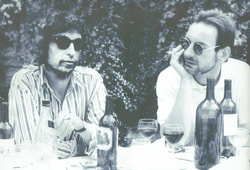

One of the problems with a first in PPE from Oxford is that the recipient has no experience of real politics, philosophy or economics. Real politics are not to be found in the party posturings of Parliament. Real philosophy is not to be found in the Bodleian. And real economics takes place in the boardrooms of multi-national companies where very smart people engage in the quotidian activities of the global capitalism to which Cameron, Osborne, Blair, Milliband, Hollande and Merkel pay lip service.
The terminology gives the clue to the nature of these activities: multi-national, global capitalism.
Why would anyone expect these companies to pay their taxes in one country when it is not necessary in another? Why are the press and the various governments so surprised?
I’m not. The likes of Google and Apple, Starbuck’s and Amazon, are, after all, doing what they do. They are in business and by definition must be business-like if they are to continue their success. Paying out millions unnecessarily is not good business. Even I understand that.
But Cameron – educated at Eton, Oxford and Conservative Central Office – doesn’t get it. Nor does Hollande – educated at a private Catholic school, HEC Paris, the Paris Institute of Political Studies, the École National d’Administration and finally by Mitterand himself.
And yet, when Hollande alienated a few of his millionaire countrymen with his taxation proposals, it was Cameron who quickly proclaimed that Britain would roll out the red carpet for any who chose to re-locate across the channel. Now he is struggling to find a way between condemnation of “aggressive tax avoidance” and his natural Conservative instincts, which is to defend whatever is the current reinvention of capitalism.
But something is happening here, and you don’t know what it is, do you, Mister Jones?
You should, however. It is nearly 50 years since I first read Monopoly Capital by Sweezy and Baran, and I have been reading extensions of their theory – the internationalization of monopoly capital, the globalization of labour and the monopolization of communications – ever since. Some of it in The Economist for Christ’s sake. It is more than 30 years since Maurice Saatchi and ‘The World’s Favourite Airline’ discovered the opportunity and potential of globalization in an article in the Harvard Business Review. The analysis was there. The warnings were there.
Did Mister Jones – and it’s a collective Mister Jones: Cameron, Holland, Blair et al – not read these? Maybe not.
The problem is, Mister Jones, “You’ve been with the professors/ and they all liked your looks./With great lawyers/you discussed lepers and crooks./You’ve been through all of F. Scott Fitzgerald’s books;/you’re very well-read it’s well-known.”
But not well enough. Because the way you are stumbling through the current crisis demonstrates no understanding of its global nature.
“And you say, Oh my God, am I here all alone?”
No. But you’re trying to deal with it as if you were. It’s an international problem and it requires international solutions. Little Englander attitudes are only there to be exploited. As are petit Français.
As Eric Schmidt, the boss of Google advised us all,"I don't think companies should decide what tax policies should be. I think governments should.
"All of us are operating in a very, very longstanding tax regime which was set up for various reasons that don't necessarily make sense to me or anyone else.
But they are the way the global tax regime works."
Go on. Google it. It makes sense to me.
I doubt whether there is anyone reading this blog who has not recognised the song from which I have quoted so liberally. It is Dylan’s birthday today, and Jill and I have booked a table in a half-way decent restaurant where we can raise a glass to Bob as he embarks on his 73rd year. May you climb on every rung. P.S. Today’s listening will consist of … Dylan, but to start, the duet of Dark Eyes with Patti Smith from the Paradise Lost tour.
Lord Acton: "the magistrate of history" I heard on the radio yesterday morning that the Queen’s speech is read from sheets of goats’ vellum, and that the ink with which the speech is written takes three days to dry. And I remembered that the conclusions of Vatican II, the modernising ‘reforms’ of the Church under Pope John XXIII, were published in Latin.
If the medium is the message, we’re in serious trouble.
Which is not to say that I believe tradition and modernity to be polar opposites. I can understand why some may believe that tradition is a catch-all word for all that they despise, that a reference to tradition is a means of bestowing an illusion of permanence on a policy, an ideology, or anything which is transient or contingent.
But if I believe in anything, I believe in history. And, as Henry James pointed out, “it takes an endless amount of history to make even a little tradition”.
It is difficult to mention even a little tradition without prefixing the word with the qualifying phrase, ‘time-honoured’.
Is it so? Is tradition time-honoured? Or is it merely ‘time-worn’?
There is some truth in the statement that tradition only becomes tradition when it is, effectively, dead; when it is finished as a progressive force. But I am not clear (as my friend Rick Gekoski would say) whether this is useful when comparing it with modernity, or its cousins modernism and post-modernism.
Bob Dylan, for example, was and is an exemplar of modernity and modernism. But as Michael Gray has pointed out, he works most successfully within the tradition of the pre-war blues. He recreates, re-interprets, re-invents the genre for us. In approach and attitude, tonality and structure, our greatest modern poets – Eliot and Auden - have worked within a tradition, the Metaphysical, which was established centuries before. And Wordsworth and Coleridge, revolutionary in politics and poetry at the time they composed Lyrical Ballads as both of book of verse and a manifesto, were working within a long-established tradition of the ballad. I will leave it to my commentators - Geoff, Chris, Charlotte and Ken - to point with accuracy to parallels in the world of art.
We are not dealing with opposites at each end of some linear progression. Modernity, in reacting against a tradition, continues that tradition, re-forming it and thus creating a new tradition against which a new generation can respond, react and renew.
It is a continual and continuing process, and is thus – in my view – time-honoured. If the tradition is worthy, it gains new life. Otherwise, it has no validity, no attraction, and it dies.
So why is the Queen still reading from goats’ vellum? Come to that, why is the Queen still reading a speech at all? And why is all this arcane Black Rod nonsense still going on?
Well, there may perhaps be some truth in another of Lord Acton’s aphorisms: that the authority of tradition serves as a restraint on absolute power.
If only …
Today's listening: correspondence between Rick Gekoski and Kazuo Ishiguro as to whether Dylan's 'lost' song I'm Not There (1956) should qualify for inclusion in Rick's book Lost, Stolen or Shredded has prompted me to return to the complete Basement Tapes and that sublime song in its original, one take version.
Today's listening: It ought to be John Cage, but 4'33" is a long time. And as Chris pointed out, which version? So I'm playing Love Minus Zero/No Limit because my love, she speaks like ...
I live in a town which has recently been named as the 46th best place to live in the country. And even though the nomination emanated from the dreaded Murdoch press, I still feel a sense of pride that my adopted town has been recognized for “all the benefits of a large town, and none of the disadvantages”.
Leamington Spa (I never use the Royal prefix and I know no-one who does) has certainly changed significantly since I arrived in 1970. Then, it still bore a passing resemblance to the town portrayed by John Betjeman in his poem Death in Leamington Spa:
Oh! Chintzy, chintzy cheeriness, Half dead and half alive.
Do you know that the stucco is peeling? Do you know that the heart will stop? From those yellow Italianate arches Do you hear the plaster drop?
The stucco is still peeling and the plaster is still dropping in many of the Regency townhouses and Victorian villas, and there remains an air of chintziness if not cheeriness in certain parts. But, and this is the element to which The Sunday Times is doubtless referring, there is an increasing vibrancy in the town, and it stems not so much from the council as from the residents themselves. The music scene, the literariness, the intellectual life, the bars and restaurants – all have grown from within over the last forty or so years.
Back in 1970, when I arrived, there was a small hippie underground, the development of which which has provided the initiative for projects such as the reclaiming of the Dell, struggles such as the fight to save the Pump Rooms and the local football club, and events such as the Peace Festival, which was started way back in 1978 and is now the longest-running free festival of its kind in the UK.
This underground was hidden from the casual visitor and, indeed, from the majority of inhabitants who were at the time voting in droves for Dudley Smith just as they had voted for Anthony Eden. But down in the Old Town, south of the river, in the CV31 postcode, there were record shops and second-hand book stores; there were good pubs and folk clubs; there were even Black and Asian people.
It was in this part of town, the other side of the railway tracks, that I chose to live initially, venturing north to work, shop and, from 1976, to drink in a newly-opened, funky wine bar called Wilde’s.
The Peace Festival is still going strong. The Dell hosts an annual community party which attracts more people each year. The Pump Rooms is not a private care clinic as the council planned but a library and art gallery. The music scene is flourishing. And Wilde’s, now in its 38th year, currently hosts the grandchildren of its first customers.
But around these, much has changed and is changing. The bourgeoisification of the town is pretty much complete with the closure of the manufacturing companies AP and Ford. The chain stores and the restaurant chains have moved into town. The famous Regent Hotel, in which the young Princess Victoria stayed, is now a Travelodge and a Wagamama. Independent shops, for which the town was famous, have closed and a new Mall built in the centre, with another major development still threatened despite the Planning Committee’s refusal and the plethora of empty premises in the Parade and adjoining streets.
So is Leamington the 46th best place to live in the UK? I have no idea. But I do know that’s it’s been a great town in which to enjoy life and bring up kids.
And I know that we can only keep it so with vigilance.
Today’s listening: Heard some great sets recently, especially from the Bob Phillips Band and Clayton Denwood in the Mondays Unplugged season in Wilde’s. And it was Clayton’s rendering of Friend of the Devil that sent me back to the early ‘70s Dead shows. Not that I need a lot of prompting!
Gareth Brynmor John How was your week-end? We had a great time, thank you. We went to London.
My nephew Gareth was singing at the Wigmore Hall and his grandmother was coming down to see and hear him and meet up with other family members at a Mothering Sunday lunch before the gig.
Jill and I used the opportunity to do a number of things which we had left undone: in other words, wine tastings, restaurant meals, and gallery visits.
We started at the home of Karl Marx in Dean Street. This is now, and has been since the year of the General Strike, a restaurant called Quo Vadis. It is, in a familiar phrase, something of a Soho institution, and has had its gastronomic ups and downs over the years, but has reinvented itself in the last 12 months by giving a free hand to Chef Jeremy Lee, who was poached from the Blueprint.
The food is a sensational combination of technical accomplishment and no nonsense. I indulged recklessly with a starter of rabbit livers and a main of ox liver – both sublime. But the highlight was Jill’s hare pie: not a ramekin with a puff pastry top, but a pudding bowl with real pastry, and inside, a huge quantity of the most delicious jugged hare. Jill allowed me only a single tasting mouthful, but it was enough to make me regret my organic choice, although not the choice of restaurant. Quo Vadis is first-class, even down to the half bottles on the wine list (such circumspection necessary because we had sampled apéros at Vinoteca on Beak Street on the way and I had a wine tasting at Berry Brothers in St James scheduled for later in the afternoon).
In short, a great start.
And the weekend continued in the same vein. The Manet exhibition at the Royal Academy, a tasting of 2011 Rhones at BBR, the early Picasso exhibition at the Courtauld, and an extraordinary show of paintings of Cornish fishermen at No 2 Temple Place, a late Victorian arts and crafts house on Embankment, which belonged to the Astors in the ‘20s, and now restored is worth a visit even if there is no exhibition on display. The Picasso was under-whelming, serving to illustrate how derivative was the 20 year old; but the Courtauld also has in its permanent exhibition many of those iconic paintings which one knows so well but, in my case, had never actually seen before. Degas, Van Gogh, Cezanne, Manet, Monet, Renoir … each room, each wall, is a surprise, a delight, an education.
But the highlight of the weekend, surely, was the Wigmore Hall on Sunday afternoon. My sister’s boy Gareth Brynmor John was the choral scholar at St John’s Cambridge and is currently at the Royal Academy of Music, where he is completing the Opera course whilst forging a serious reputation in the musical world and winning countless competitions.
On Sunday, he performed a great deal of Britten, and a little of Britten usually goes a long way.
But yesterday, Britten’s settings of Songs and Proverbs of William Blake did not go far enough. The power of Gareth’s voice, combined with the ability to convey the subtlest of nuances of meaning and emphasis, bestowing gravitas even where there was none originally, made us want for more.
And I will long remember the beauty, in the setting of the Tyger, of that final couplet:
What immortal hand or eye Dare frame they fearful symmetry?
Today's listening: It should be Britten, I guess, but thanks to links from Rick Hough in Boston and Michael Gray in the south of France, it's ABB - the Allman Brothers Band.
Jimi Hendrix by Bill Zygmant. This is the photograph of which I have a print. I never saw Hendrix. I don’t know why. I was going to a great many gigs during his London period, listened in awe to his early albums, and cried the night I heard he had passed as I came out of a showing of Zabriskie Point, the soundtrack to which featured the other great guitar hero of the times, Jerry Garcia.
The closest I came – physically – to Jimi was a brief period a couple of years later, when I worked in a short-lived advertising agency which had taken over a couple of floors of the house opposite Claridge’s in which he lived and died. And today, amongst the pictures of Dylan and Sartre and Ted Williams on the walls of my office, is a wonderful portrait of Hendrix taken by Bill Zygmant a few days before he died. (You can find out more about Bill and his sensational photographs at www.billzygmant.co.uk.)
I remember that balmy 1970 night outside the cinema in Leicester Square. I was with a university comrade called Phil Geddes, who was subsequently blown up by the IRA in 1983 outside Harrods. We discussed not the movie we had just seen but the importance of Hendrix. The discussion, I recall, focused on the political importance of the man and his music, and the role of rock music in the struggle. At the time, I would have placed more importance on the overtly political bands and on those, such as the Airplane, which were revolutionary both lyrically and musically. And maybe I was a little dismissive of the playing of the guitar upside down, the flames, the smashing of amps and speakers ( I’m pretty conservative at heart)..
I would have been wrong.
But I suspect that is why I did not see Hendrix live. Instead of seeing him, I was probably attending a gig by Edgar Broughton, or analysing each line of A Hard Rain’s Gonna Fall, or organising a demonstration against Enoch Powell or writing an article about the Greek junta.
All worthy activities, but none of them as fulfilling, in retrospect, as seeing Hendrix in person.
My loss.
Today’s listening: Winterland, 12 October 1968. An extraordinary 15 minute Red House is the highlight of one of the great improvisatory gigs of the time.
Like Bob, Michael Gray divides opinion. I know there are many who have issues with him. I am not one of those.
Ever since his seminal Song & Dance Man was published in 1972, Gray’s meticulous and exhaustive excavation of Bob’s work has been a fundamental source of information and inspiration for me. Yes, I have read Heylin and Ricks, Greil Marcus and Paul Williams, Robert Shelton and Howard Sounes, Andrew Muir and Stephen Scobie. I have shelves full of The Telegraph, The Bridge and Isis. But it is to Song & Dance Man and The Bob Dylan Encyclopedia that I return constantly to check a fact or a reference and then find myself, an hour or so later, reading a third or fourth entry and forgetting the nature of my original enquiry.
This is primarily because of the fascination of the subject matter of course; but also because Michael Gray writes very well. As I discovered last night, he speaks very well too.
I was first to arrive in the unprepossessing surroundings of the Bedworth Arts Centre, and embarrassed to be briefly mistaken for the man himself as I stood alone at the bar. By the scheduled start time, we were forty or so only, but if Michael was disappointed, he didn’t show it. With Derek Barker, the founder and editor of Isis, in attendance, he was probably content to settle for quality rather than quantity.
With a 15 minute break for conversation and sales of his Bob Dylan Encyclopedia Greatest Hits CD, Michael spoke for two hours on Bob Dylan and the Poetry of the Blues. (He did this without a note, and it occurred to me as I drove home that David Cameron had won the Tory leadership merely on the basis that he was capable of delivering a speech without recourse to either lectern or script. Ah well.)
Michael’s faultless performance is clearly the result of professional preparation and erudition, as well as a continuing passion for his subject. It is probably true that there was little which was unfamiliar to readers of chapters such as “Even post-structuralists oughta have the pre-war blues”, but his address and well-chosen musical and VT illustrations reminded us of Bob’s borrowings from, allusions to, and reinventions of, those pre-war blues. As Michael said (and I’m not clear if he was quoting or parsing), Leadbelly, Blind Lemon Jefferson et al “were not so much figures of the past, but continually present” in Dylan’s life.
So an interesting evening, an informative evening, an enjoyable evening. But what I loved most were those moments when Michael was suddenly revealed as a fan rather than an academic commentator: when a smile would break out as he noted in one context that “only Bob could write that”; or, when I watched his relish and animation as the audio played the outtake of Blind Willie McTell from the Infidels sessions.
(In which context, I appreciated his point about that song. It couldn’t be “Nobody can sing the blues like, for example, Robert Johnston”: fewer potential rhymes, you see. And I remembered an interview in which Bob was asked to explain the concept, in Man in the Long Black Coat on Oh Mercy, that “people don’t live or die/people just float”. Bob said he was just looking for a rhyme for “coat”.)
I also loved Michael's generosity of spirit, his patient willingness to engage with his audience individually as well as collectively, and his story of being accused of having a “dissociated sensibility” when, at the University of York, he argued the artificiality of the distinction between so-called high and popular culture.
It’s a badge I think he wears with pride. And, as a lover of both Keats and Dylan, so do I.
Today's listening: a passing reference to Planet Waves last night has sent me back to this excellent but oft-ignored album from 1974. Always did prefer Ceremonies of the Horsemen, the original title.
More informed: Professor Callen
The story goes that a High Court judge, exasperated by a line of questioning from FE Smith, told the barrister that having heard the evidence, he was “none the wiser”.
“No, my lord” replied Smith, “but far better informed”.
I was reminded of this watching our friend Anthea Callen on Fake or Fortune?, a BBC TV programme which follows the progress of authenticating works of art. This week featured Degas, one of Anthea’s specialist subjects.
Of course, the point of the programme is to pronounce the picture genuine and thus turn a painting worth a few hundred into something which the owner can sell for hundreds of thousands, so any perceived reluctance is a potential issue for Fiona Bruce, the ubiquitous presenter. So when Anthea refused to give an unconditional guarantee, Bruce told her that “connoisseurship is an opinion, and there will be several opinions.”
I will treasure Anthea’s response for some time. “Of course” she said. “But some people are more informed than others.”
For my part, I didn’t think it was a particularly good painting, certainly not as good as that of which it was possibly a copy or a precursor. But one of the issues I have with the art market is that a painting is good or bad, worthless or priceless, according to its maker.
It doesn’t work in other fields. As I listen once again to Tempest, I reflect that Bob’s authorship does not bestow greatness per se. He has written some spectacularly bad songs in his time, and they are no better because he wrote them. Tempest received pretty much unanimous praise from the reviewers, much of it based on a single sneak preview, and much of it influenced by one of the most intensive marketing campaigns for any Dylan release.
There has been no shortage of phrases to sing his praises.
But like Anthea and her Degas, I have not rushed to judgement. I have now spent two weeks with Tempest. And I am finally ready to confirm that this is an extraordinary album. But not without flaw.
I am, for example, skipping the first and final tracks on most plays. The first is a good song, but is out of kilter with the rest of the album. The lyrics are by Robert Hunter, and would be more appropriate for the other Bob, Weir, in his cowboy mode. The final song is certainly a “heartfelt tribute”, but so was my bursting into tears when I heard of John’s death: heartfelt but not art.
The core of the album, however, from Soon After Midnight through to the title track, is uniformly magnificent and uniformly dark. If it was once “not dark yet”, it certainly is now. His epic narratives are now populated with “flat-chested junkie whores”, corrupt financiers and politicians. They are punctuated with lines of Brechtian viciousness. In no song is there any sense of redemption. It is remorselessly bleak. Everything is broken.
As he sings in Early Roman Kings: “I can strip you of life/strip you of breath/ship you down/to the house of death.”
In the “dark illumination” of this album, Bob has shipped us down to a Desolation Row for our times, and it is a morbid and frightening experience to which we will return again and again.
Today’s listening: Still Tempest, but this morning paying particular attention to the excellence of Tony Garnier, whose upright bass is masterly and (rightfully) prominent throughout.
Catalan music in the place Dampmartin On World Music Day, one faites de la musique at the fêtes de la musique. (It’s a French homophone.)
The idea of a music festival to mark the summer solstice began in France, and although it has now spread throughout the world, France still takes it pretty seriously. Which is to say, with a complete lack of seriousness as every generation comes out to eat a special menu de la fête (usually moules frites), drink even more than normal, and enjoy a variety of music, good and bad. Uzès, famous for its Nuits Musicales featuring Bach, Vivaldi, Purcel, Gabrieli et al, throws itself wholeheartedly into this slightly different musical activity.
Last night, we were in town to take part in the festivities, meeting up with Nick and Anthea in the Bistro d’Uzès – a gastronomic rather than musical choice, because the band playing between the Bistro and the Suisse were Catalonian. Nick, an occasional jazz musician, pointed out that the rhythms were those of Latin jazz, but I’m afraid a little of this faux flamenco goes a long way as far as I’m concerned.
So, having enjoyed a good meal, and a very good demi or two of Chateau Mas Neuf, a Costières de Nîmes wine which used to be on the list at Wilde’s and probably should be still, we set off to make the circuit of world music.
In the Place aux Herbes, the real deal flamenco was playing, complete with dancers. At the Logis des Arts, a jazz combo. Outside Vin sur Vin was Dom Ryder, a multi-lingual jack-of-all trades who resembles a Grateful dead roadie. By Bar Fontaine was a band of elderly musicians performing Rat Pack classics, complete with Nelson Riddle orchestration and enticing even more elderly couples onto the street to dance cheek to cheek. At the Esplanade, it was down with the kids, with a cool dude working hard on the decks. We ended up at the Café Mouscade, more because a table suddenly became available than for the music, but were entertained by a very competent and professional rock-pop band with an excellent vocalist and impressive lead guitarist.
By 11.30-ish, we were ready for our beds. Jill and I strolled back down the boulevard Gambetta towards the car park, pausing for a while to watch an impromptu display of break-dancing outside the Lycée.
The kids were brilliant, giving us the perfect end to the evening. After all, "All we need is music, sweet music/There'll be music everywhere/There'll be swingin', swayin',and records playin,/Dancin' in the street.
There was music everywhere. There was swingin' and swayin' (not all in time to the music and not all because of the music) and records playin'. And a great night was had by all.
Today’s listening: The Grateful Dead, Dancin in the Street. Plus, from Little Feat, some “country with a boogie beat”.
Rock n Roll at the Cafe Mouscade Dancin' in the street, outside the lycee
Home!
In common with thousands of other tourists, we used to pass the village of Mornas every year as we raced down the Autoroute de Soleil on our way to Grasse, Cogolin or St Tropez. The imposing ruins of the medieval fortress towered above the autoroute to our left, and each year we would promise ourselves that, one day, we would search out the village and explore it. Of course, we never did. With three or four young children in the back, the priority was to find our rented villa, exchange jeans for shorts, and open a bottle of chilled rosé.
Then, in May five years or so ago, Jill and I were attempting a (spurious) short cut from Bollène to St Quentin, and – serendipitously – drove into this delightful village, which is built at the foot on the huge cliff on which the fortress was built. It being midday, we stopped, parked and found our way to Le Manoir, a Logis de France, where we enjoyed a quite superb lunch on the terrace. I can still remember the first mouthful of my truffle omelette.
Since then, lunch in Mornas has been the traditional curtain-raiser to our summer in the south of France (although this year, there is an argument to be made for that glass of Savigny Les Beaunes 2008 in Beaune itself!) The prix fixe menu this year was as good as ever, the demi of local rosé as refreshing as ever, and the service as friendly as ever. It is the perfect introduction to the south, and leaves us with merely a half hour drive through Pont St Esprit before we arrive in St Quentin la Poterie itself and set about airing, dusting and cleaning our small village house which has survived another winter intact.
This morning is the fifth day of our stay. The sun is in the courtyard. It is 21 degrees at the moment, and it promises to be 26 this afternoon. Which will do very nicely, merci.
We have done a great deal in less than a week. The house is once again a home. We have finished some unfinished work. We have caught up with old friends. We have visited our first market in St Quentin and our second the larger one in Uzès. We have discovered that Momo’s has been taken over by the guys from Le P’tit Café, one of our favourite restaurants in Uzès, so my first salade gourmande of the summer was eaten within a 100 metre walk of home. This is good news, although the eclectic buzz of Momo’s cannot be replaced and is much missed.
Yesterday, we attended our first concert of the year. The fixed point of the second Sunday of the month is, in the winter, the performance of The Swaps at The Somerville. Last night, by way of contrast, it was the choirs of Languedoc-Roussillon and the Uzège performing Fauré’s Requiem, together with songs by Saint-Saëns, Hindemith, Milhaud and Tchaikovski, in the Temple d’Uzès, the Protestant church. These amateur choirs acquitted themselves very well, but the moment the professional soloists stood and sang, one knew that these were exceptional voices. Soprano Raphaële Andrie and baritone Alain Iltis made my day, and even being swept by the Nationals at Fenway could not depress my spirits. (Although an apprehension that the Front National may have won the Gard in yesterday’s elections does.)
So: plus ça change, plus c’est la même chose. We are already immersed in la vie française. But this evening, whether we like it or not, we will be forced to be English again. It is England v France, and we plan to watch the game with a pichet or two in the Café de France.
Let's hope the entente can stay cordiale.
Today’s listening: The Ravel String Quartet. Just came on the iPod by chance. So beautiful.
The Chorale Encantarello d'Uzes takes the applause.
|